Guide
Valorant guides: what to master, tier by tier, on the way to Radiant
Free Valorant guides: the 7 competitive pool maps, callouts, setups, economy, ranks and fundamentals, sorted by rank tier so you know what to work on next.
What these guides cover
Reaching Radiant does not come down to one talent. You need to aim well, but also to place your crosshair before the fight, know every angle of the map, buy at the right time, put your utility in the right spot and play with four teammates. These guides take those topics one at a time, with Riot's numbers when they exist and advice from reference guides, sourced and dated.
Everything is free and readable without an account. Each guide ends with a concrete drill, because advice you never practice changes nothing in a real match.
The path to Radiant, tier by tier
Most players sit in the middle of the ladder: Silver, Gold and Platinum hold about 60% of ranked players. Radiant holds 0.05%, and Immortal plus Radiant 1.42%. What gets you to the next tier is not the same at every step. Here are the priorities that reference guides give, and where to work on them.
- Iron and Bronze: learn the guns, the maps and the agents, then stop crouch-spraying and limit shooting while running, crosshair at head level. Start with crosshair placement and the callouts of your map.
- Silver and Gold: patience, headshots, two or three agents whose setups you know, and the economy (buy, force, save). Read the economy guide and the setups of each map.
- Platinum and Diamond: comms, map control, rotations, utility combined with your team, trades, and playing to win the round instead of padding the scoreboard. The glossary gives you the words, the site plans give you the placements.
- Ascendant and Immortal: review your games to fix your habits, find your role, then target your personal weaknesses; the last step mostly takes volume. The ranks guide explains how RR is earned at that level.
Maps, callouts and setups
Every map has its own guide: the official callouts in your language, the map layout, the attack and defense plan for each site, and agent setups drawn on the real minimap. Maps in the competitive pool come first. The pool changed in patch 13.08: Bind and Corrode come in, Ascent and Split go out. At the end of September it had 7 maps, and Abyss, Haven, Lotus, Summit and Sunset stay in.
What Road2Radiant measures, and what it does not
These guides teach what an aim trainer cannot measure: decisions, positioning, the economy. Aim, on the other hand, can be measured. The Road2Radiant benchmark splits it into up to 8 subcategories (6 in Novice), on the site's own scale, which is not the official Voltaic rank. The daily routine then targets your weak spots, in 20-minute sessions.
No guide promises you a rank. They tell you what to work on, in what order, and how to check that it is moving.
In this section
- Valorant attack strategy: default, execute, lurkValorant attack strategy: take space, run your default, execute in 2 or 3 seconds, lurk and fake. A plan for every round, with timing benchmarks and mistakes.
- Valorant Comms: Callouts That Win RoundsValorant comms made simple: a call in under 5 words (who, where, how much), pings, silence in a clutch, solo queue and muting. A method plus a drill.
- Valorant crosshair placement: aim firstValorant crosshair placement: keep your crosshair at head level, pre-aim the wall edge and run a 10-minute no-shoot drill before you queue, step by step.
- Valorant Defense: Hold, Anchor and RotateValorant defense: get info without dying, anchor to buy 10 seconds, rotate on 3 confirmed enemies and give up the site at the right time. Benchmarks, mistakes.
- Valorant Economy: Buy, Save or ForceValorant economy: 3,000 credits per round won, 1,900 then 2,400 then 2,900 per loss, 9,000 max. When to buy, save or force a buy, with worked examples.
- Valorant Glossary: Player Terms ExplainedValorant glossary: eco, retake, trade, IGL, post-plant and more. Every term defined, with the 7 s defuse, the 3.5 s half defuse and the credits that matter.
- Valorant peeking: jiggle, wide, shoulderValorant peeking: pick a jiggle, shoulder or wide swing from what you know. Riot put peeker's advantage at 40 to 70 ms in 2020: stop moving before you shoot.
- Valorant Post Plant and Retake: Spike GuideValorant post plant and retake: 4 s plant, 7 s defuse, half defuse at 3.5 s, 45 s to explode. Where to stand, when to defuse and when to save your gun.
- Valorant ranks: RR, distribution and RadiantValorant ranks explained: 9 ranks, 100 RR per division, a Radiant threshold of 200 to 500 RR by region plus the top 500, and how players are split in 2026.
- Valorant tilt: stay sharp in rankedValorant tilt: spot it, set a stop rule (2 losses in a row is a blog rule of thumb, not science) and structure your ranked session so you stay clear-headed.
- Valorant trading: how to trade killsValorant trading: stay in range of your entry, re-peek the angle that killed them, never take first contact alone. 2-1-2 pairs, mistakes and a drill.
- Valorant VOD review: a simple methodValorant VOD review: watch the 10 seconds before every death, ask 5 questions, look for trends across games and fix one habit at a time. A simple weekly method.
Map guides
The competitive pool maps, with their callouts, site plans and setups.
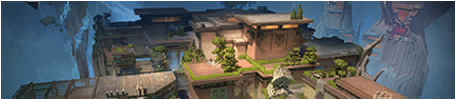 AbyssCompetitive poolSite A · Site BAbyss is a two-site map with three lanes and no boundary walls: falling into the void kills instantly. It has been in the competitive queue since patch 13.04, in August 2026.4 setups
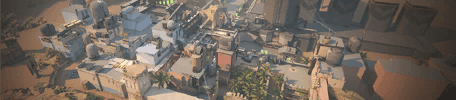 BindCompetitive poolSite A · Site BBind has two sites, A and B, and no mid: two one-way teleporters link the sides. It is back in the competitive queue since patch 13.08.4 setups
 CorrodeCompetitive poolSite A · Site BCorrode is a two-site, three-lane map in a medieval fortress, with a long, narrow mid. It has been in the competitive queue since patch 11.00 and came back in 13.08.4 setups
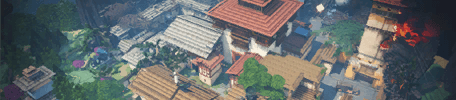 HavenCompetitive poolSite A · Site B · Site CHaven is the three-site map: A at the top of the minimap, B in the middle, C at the bottom. Attackers start from the east and pick a target, while defenders have to cover everything.4 setups
 LotusCompetitive poolSite A · Site B · Site CLotus is a three-site map, A, B and C, set in a city of flowers in India. It plays with rotating doors, a breakable wall on the A side and a silent drop.6 setups
 SummitCompetitive poolSite A · Site BSummit is a two-site map with three lanes, set in a Radiant academy in the mountains. Three reactive walls close during the round and change the rotations.
 SunsetCompetitive poolSite A · Site BSunset is a classic two-site, three-lane map set in Los Angeles. Mid is wide and links the two sites through connectors: whoever holds it sets the pace of the round.5 setups
Setups by agent
Every setup of an agent across all maps, on one page.


Read next
Ready to measure your aim?
Sources
- esportstales.com (opens in a new tab)
- prosettings.net (opens in a new tab)
- playvalorant.com (opens in a new tab)
- prosettings.net (2) (opens in a new tab)
Updated on October 15, 2026